
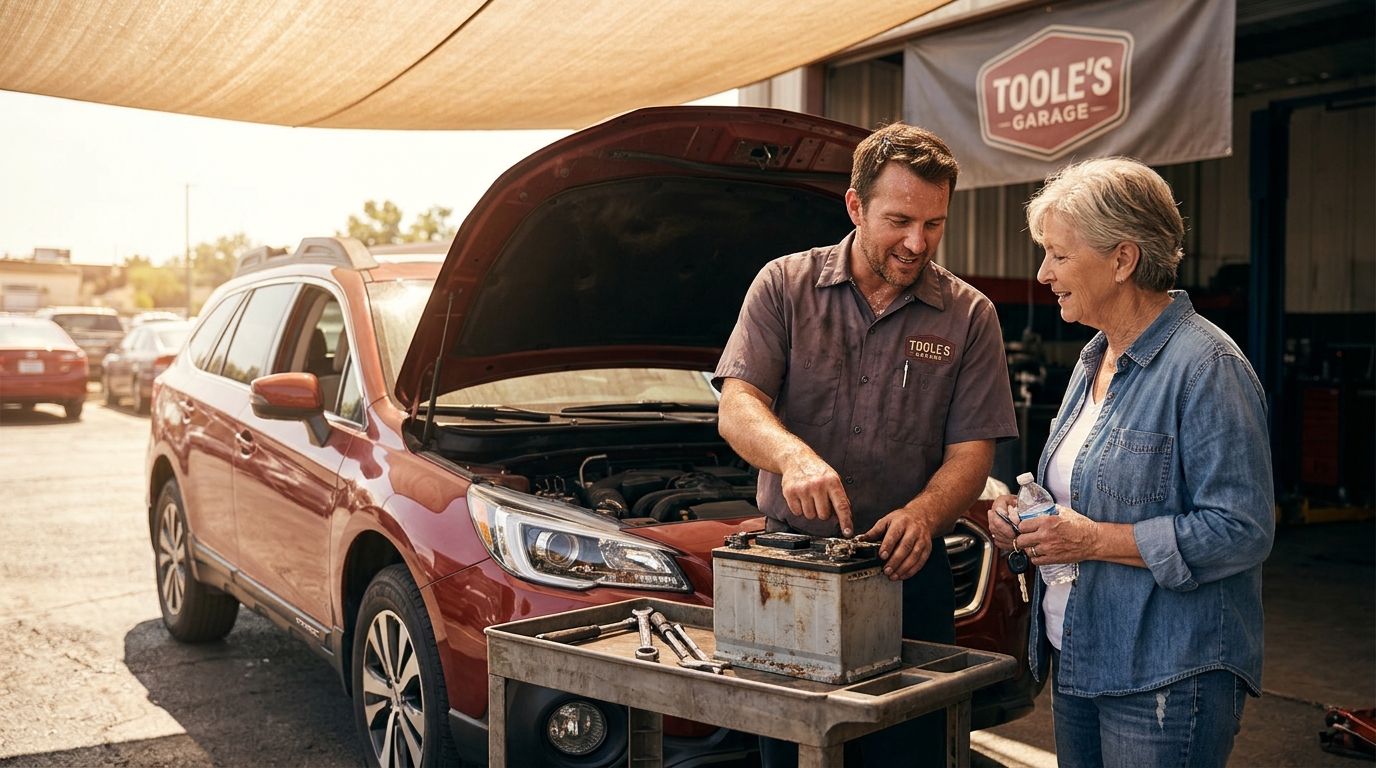
Extreme heat is one of the most significant threats to vehicle battery longevity, particularly during long summer drives. High temperatures accelerate chemical reactions inside the battery, leading to faster degradation and potential failure. At Toole's Garage, we see many vehicles with heat-stressed batteries that require replacement or conditioning. Understanding these mechanisms helps drivers protect their investment and avoid being stranded on the highway.
1. Accelerated Internal Chemical Reactions
Heat speeds up the chemical processes that deplete battery capacity. Lead-acid batteries operate through electrochemical reactions that are temperature-dependent. As ambient temperatures rise, these reactions occur at a faster rate, causing the battery to lose its charge more quickly. This accelerated aging reduces the overall lifespan of the battery, even if it appears to be functioning normally during the drive.
2. Increased Water Evaporation
High heat causes electrolyte fluid to evaporate, exposing internal plates. In flooded lead-acid batteries, the electrolyte is a mixture of water and sulfuric acid. Extreme heat increases the rate of evaporation, which can lower the fluid level below the positive plates. When the plates are exposed to air, they oxidize and corrode, permanently damaging the battery's ability to hold a charge. This is a common issue in vehicles driven in hot climates like California.
3. Warping of Internal Plates
Excessive heat can physically warp the lead plates inside the battery. The internal structure of a battery relies on precise spacing between positive and negative plates. When subjected to sustained high temperatures, these plates can expand and warp. This warping may cause the plates to touch, creating a short circuit that drains the battery or causes it to fail completely. This physical damage is often irreversible and requires a full battery replacement.
4. Reduced Cooling Efficiency
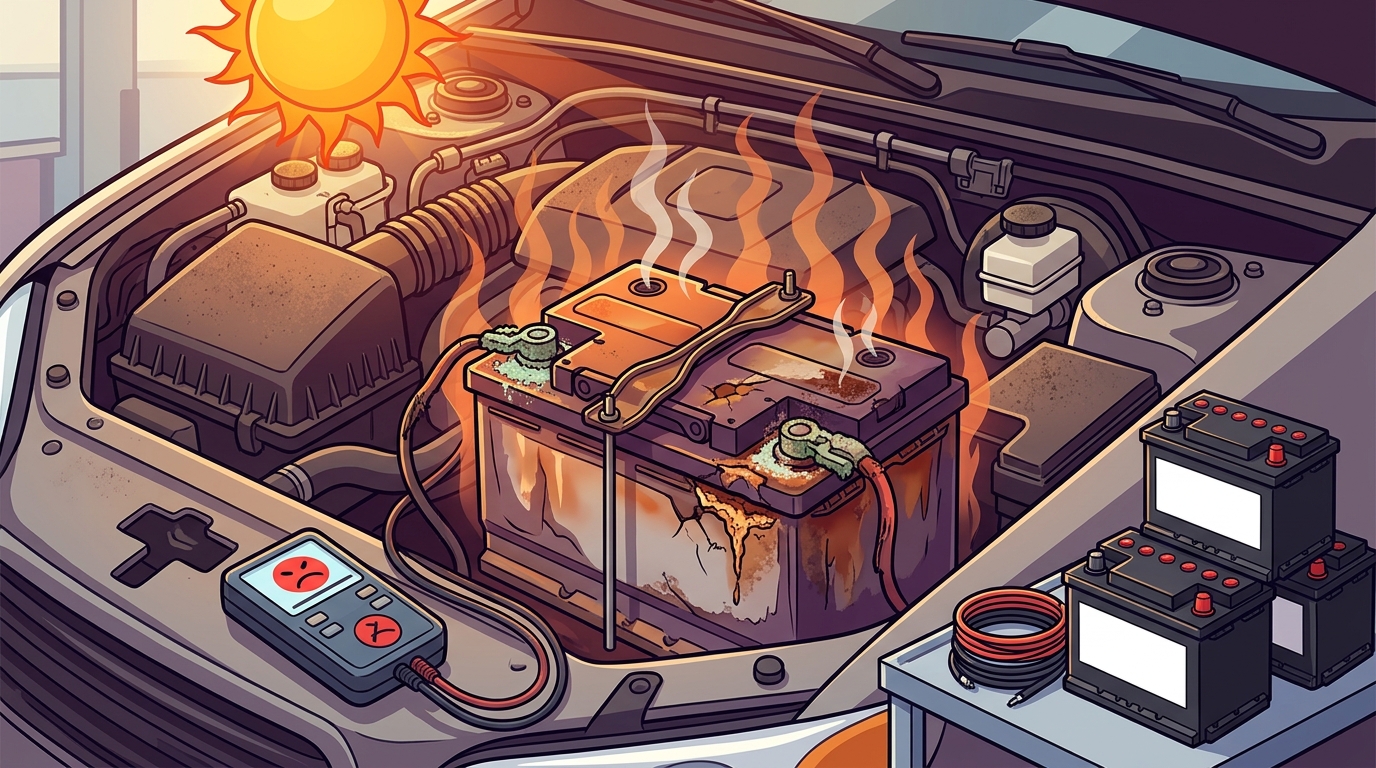
Hot air reduces the battery's ability to dissipate internal heat. Batteries generate heat during charging and discharging cycles. In extreme ambient heat, the temperature differential between the battery and the surrounding air is minimal, making it difficult for the battery to cool down. This trapped heat further accelerates the degradation processes described above. Proper ventilation around the battery compartment is crucial to mitigate this effect.
5. Increased Parasitic Drain
Heat increases the electrical load from auxiliary systems. During long summer drives, drivers often use air conditioning, which places a significant load on the engine and the charging system. The alternator works harder to maintain battery charge while powering the AC compressor. This increased demand, combined with the heat, can stress the battery and the charging system, leading to premature failure if the battery is already weakened.
6. Corrosion of Terminals and Cables
Heat and humidity accelerate corrosion on battery terminals. While heat itself is a primary factor, it often combines with humidity to create an environment conducive to corrosion. Corroded terminals increase electrical resistance, which can cause starting difficulties and reduce the efficiency of the charging system. Regular inspection and cleaning of terminals are essential to maintain optimal performance in hot weather.
7. Swelling and Case Damage
Extreme heat can cause the battery case to swell or crack. The plastic casing of a battery is designed to withstand a certain range of temperatures. Prolonged exposure to extreme heat can cause the case to soften, swell, or even crack. This not only compromises the structural integrity of the battery but also poses a safety risk due to the potential for electrolyte leaks. A swollen battery should be replaced immediately to prevent further damage to the vehicle.
Choosing the Right Battery for Hot Climates
Frequently Asked Questions
How often should I check my battery in hot weather?
It is recommended to have your battery tested at least once a year, or more frequently if you drive in extreme heat. Regular testing can identify early signs of degradation before they lead to a complete failure.
Can I repair a heat-damaged battery?
In some cases, adding distilled water to a flooded battery can help if the fluid level is low. However, if the plates are warped or the case is cracked, the battery must be replaced. Toole's Garage can assess the condition of your battery and advise on the best course of action.
Does air conditioning affect battery life?
Yes, using air conditioning increases the electrical load on the battery and charging system. While modern vehicles are designed to handle this load, a weakened battery may struggle to maintain charge, especially in hot weather.
What is the best way to store a car in extreme heat?
If possible, park in a garage or shaded area to reduce heat exposure. If you must park outside, consider using a battery tender to maintain charge levels and prevent deep discharge, which can damage the battery.
How long do car batteries last in hot climates?
Car batteries in hot climates typically last between three to five years, depending on usage and maintenance. Extreme heat can shorten this lifespan, so regular monitoring is essential.
Protect Your Battery with Toole's Garage
Extreme heat poses a significant threat to your vehicle's battery, but with proper care and regular maintenance, you can extend its life and ensure reliable performance. At Toole's Garage, we provide expert battery testing, replacement, and conditioning services to keep your vehicle running smoothly. Schedule an appointment with our team today to ensure your battery is ready for the summer ahead.