
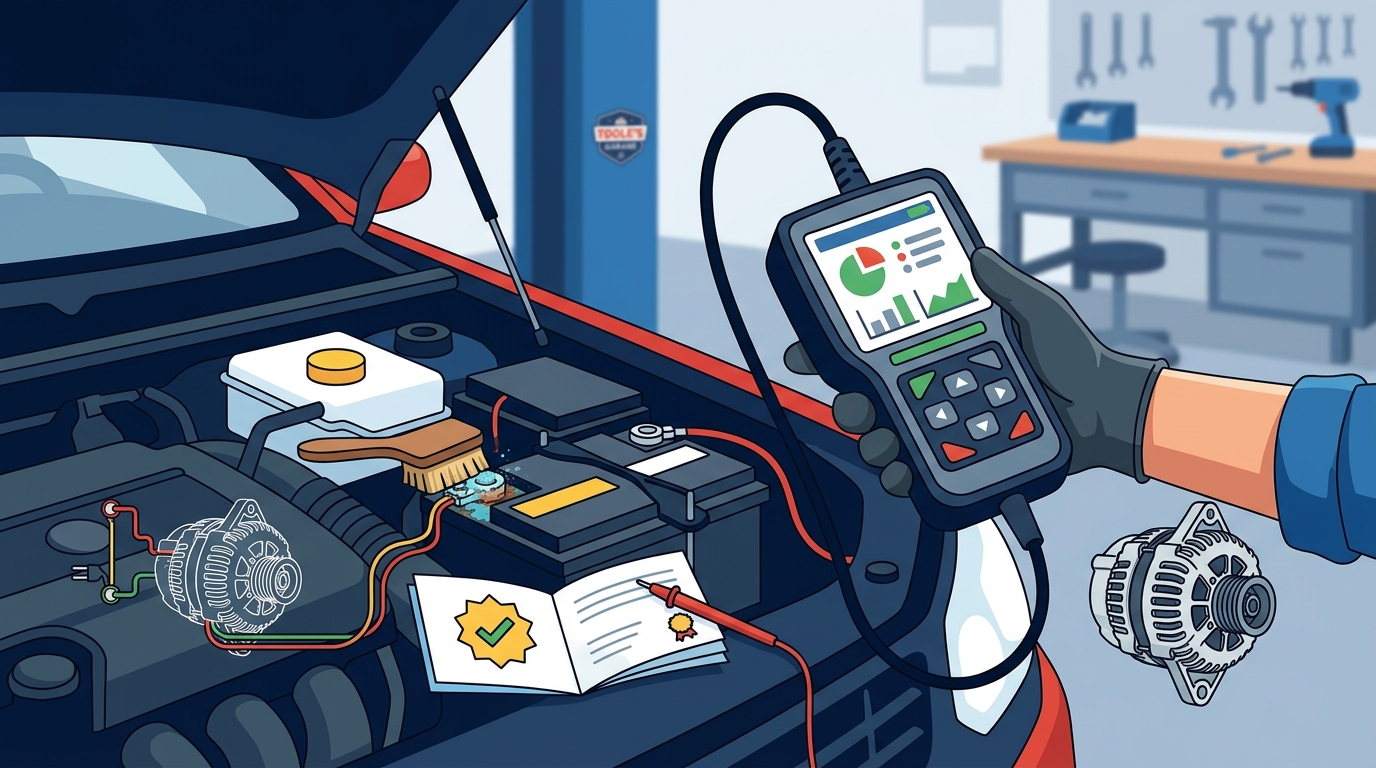
Before paying for a full battery replacement, verify that the battery is truly the root cause of the issue. You should check the warranty, run a diagnostic test, inspect the alternator, clean the terminals, and review software updates. This guide covers these five critical steps to help you avoid unnecessary costs and ensure your vehicle is properly maintained.
Warranty Coverage
Warranty coverage is a contractual guarantee provided by the manufacturer or retailer that protects the buyer against defects in materials or workmanship for a specified period. Before purchasing a new battery, it is essential to understand the specific terms of this protection. Many standard batteries come with a limited warranty that covers defects, but they may not cover physical damage, improper installation, or normal wear and tear.
Understanding Warranty Types
There are generally two types of warranties: full replacement and pro-rated. A full replacement warranty covers the entire cost of a new battery if it fails within a certain timeframe, often the first year. After that period, the warranty may become pro-rated, meaning the manufacturer covers a percentage of the cost based on the age of the battery. At Toole's Garage, we advise customers to review these terms carefully to ensure they are getting the best value for their money. according to IA 81 Replacement
Registration and Documentation
Some warranties require immediate registration of the battery to be valid. Failing to register the product can result in a shorter warranty period or no coverage at all. Keep your receipt and warranty card in a safe place. If you are unsure about the coverage, ask your service provider to explain the terms before you sign off on the repair. This step alone can save you hundreds of dollars if the battery fails prematurely.
Diagnostic Testing
Diagnostic testing is the process of using specialized equipment to measure the electrical health and capacity of a battery. A simple voltage check is not enough to determine if a battery is failing. A professional load test or conductance test provides a much more accurate picture of the battery's ability to hold a charge and deliver power when needed.
Load Tests vs. Conductance Tests
A load test applies a heavy electrical load to the battery for a short period to see if the voltage drops below a certain threshold. A conductance test measures the battery's internal resistance, which indicates its ability to deliver current. Both methods are superior to a simple multimeter reading. If a battery fails a load test, it is likely time for a replacement. However, if it passes, the issue might lie elsewhere in the vehicle's electrical system.
State of Health Reports
Modern diagnostic tools often provide a state of health report, which gives a percentage indicating how much of the battery's original capacity remains. A battery with a state of health below 50% is generally considered to be near the end of its life. This data helps you make an informed decision rather than guessing. At Toole's Garage, we use these tools to provide transparent and accurate assessments of your vehicle's electrical components.
Alternator and Charging System
The alternator is the component responsible for recharging the battery while the engine is running and powering the vehicle's electrical systems. If the alternator is failing, it may not be able to maintain the battery's charge, leading to a dead battery. Replacing the battery without fixing the alternator will result in the same problem recurring shortly after the new battery is installed.
Signs of Alternator Failure
Common signs of a failing alternator include dimming headlights, a whining noise, or a burning rubber smell. The check engine light may also illuminate if the charging system voltage is out of range. A professional inspection should include a charging system test to ensure the alternator is producing the correct voltage, typically between 13.5 and 14.5 volts. If the alternator is not charging properly, it must be repaired or replaced before a new battery is installed.
Parasitic Drains
Another factor in the charging system is parasitic drain, which occurs when electrical components continue to draw power after the engine is turned off. This can slowly drain a healthy battery overnight. A parasitic draw test can identify which circuit is causing the drain. Addressing this issue is crucial for maintaining battery health and preventing unexpected failures.
Battery Terminals and Connections
Battery terminals are the metal posts on the top of the battery where the cables connect. Over time, these terminals can become corroded due to exposure to moisture and air. Corrosion creates resistance, which can prevent the battery from charging properly or delivering enough power to start the engine. Cleaning and tightening the terminals is a simple and inexpensive fix that can often resolve starting issues without the need for a new battery.
Identifying Corrosion
Corrosion typically appears as a white, blue, or greenish powder on the terminals. If you see this buildup, it is a sign that the connection is compromised. You can clean the terminals with a baking soda and water solution and a wire brush. After cleaning, apply a dielectric grease to prevent future corrosion. This maintenance step is part of routine vehicle care and can extend the life of your battery significantly.
Loose Connections
Vibration from driving can cause battery cables to loosen over time. A loose connection can cause intermittent starting problems and may damage the battery terminals. Ensure that the cables are tight and secure. If the cables are frayed or damaged, they should be replaced. At Toole's Garage, we inspect all connections during our service visits to ensure your vehicle is in optimal condition.
Software Updates and Electronic Systems
Software updates are digital patches or upgrades applied to a vehicle's electronic control units to improve performance, fix bugs, or add new features. In modern vehicles, the battery is closely integrated with the vehicle's computer systems. A software glitch can sometimes cause the battery to drain or the vehicle to report a battery fault even when the battery itself is healthy. Checking for available software updates is a critical step before replacing the battery.
Impact on Battery Management
Many vehicles have a battery management system that monitors the battery's state of charge and health. If the software controlling this system is outdated or buggy, it may provide inaccurate readings. A software update can correct these issues and restore proper battery management. This is particularly important for hybrid and electric vehicles, where the battery system is more complex. At Toole's Garage, we have the expertise to handle these advanced systems and ensure your vehicle is up to date.
Dealer vs. Independent Shop Updates
Some software updates are only available at the dealership, while others can be applied by independent shops with the right tools. It is worth asking your service provider if they can perform the necessary updates. If an update is required, it is often free of charge and can resolve the issue without the cost of a new battery. This step is often overlooked but can be the difference between a simple fix and an expensive replacement.
Comparison of Battery Health Checks
| Check Type | Purpose | Cost | Time Required |
|---|---|---|---|
| Warranty Review | Verify coverage terms | Free | 5-10 minutes |
| Load Test | Measure capacity under load | Low | 10-15 minutes |
| Charging System Test | Check alternator output | Low | 15-20 minutes |
| Terminal Inspection | Check for corrosion/loose connections | Free | 5 minutes |
| Software Update | Fix electronic glitches | Free | 30-60 minutes |
Key Takeaways
- Always review the warranty terms before purchasing a new battery to understand your coverage.
- Use professional diagnostic tools like load tests and conductance tests to assess battery health.
- Inspect the alternator and charging system to ensure it is recharging the battery properly.
- Clean and tighten battery terminals to prevent corrosion and loose connections.
- Check for software updates that may resolve battery-related issues without a replacement.
- Address parasitic drains that can slowly deplete a healthy battery overnight.
- Consult a trusted service provider like Toole's Garage for a comprehensive electrical system inspection.
- Keep records of all maintenance and diagnostic tests for future reference.
Frequently Asked Questions
How long does a typical car battery last?
A typical car battery lasts between three to five years, depending on climate, driving habits, and maintenance. Extreme heat or cold can shorten this lifespan. Regular maintenance and proper storage can help extend the life of your battery.
Can a bad alternator kill a new battery?
Yes, a failing alternator can prevent a new battery from charging properly, leading to a dead battery. It is crucial to test the alternator before replacing the battery to avoid this issue.
Is it worth buying a premium battery?
Premium batteries often offer better performance, longer lifespan, and better warranty coverage. While they cost more upfront, they can save you money in the long run by reducing the frequency of replacements.
How do I know if my battery terminals are corroded?
Corroded terminals appear as a white, blue, or greenish powder on the metal posts. If you see this buildup, clean the terminals with a baking soda and water solution and apply dielectric grease.
Do software updates affect battery life?
Yes, software updates can improve battery management systems and fix bugs that cause unnecessary drain. Keeping your vehicle's software up to date is an important part of battery maintenance.
Where can I get a reliable battery diagnostic test?
You can get a reliable battery diagnostic test at a trusted auto repair shop like Toole's Garage. Our technicians use professional tools to provide accurate assessments of your battery's health.
What is a parasitic drain?
A parasitic drain is when electrical components continue to draw power after the engine is turned off. This can slowly drain a healthy battery overnight. A parasitic draw test can identify the source of the drain.
How often should I check my battery terminals?
You should check your battery terminals every few months or during routine maintenance. Cleaning and tightening the terminals can prevent corrosion and ensure a good connection.
Conclusion
Before paying for a full battery replacement, take the time to verify the root cause of the issue. Check the warranty, run a diagnostic test, inspect the alternator, clean the terminals, and review software updates. These steps can save you money and ensure your vehicle is properly maintained. At Toole's Garage, we are committed to providing honest and reliable service to help you make informed decisions about your vehicle's care. Contact us today to schedule an appointment and get your vehicle back on the road with confidence.