

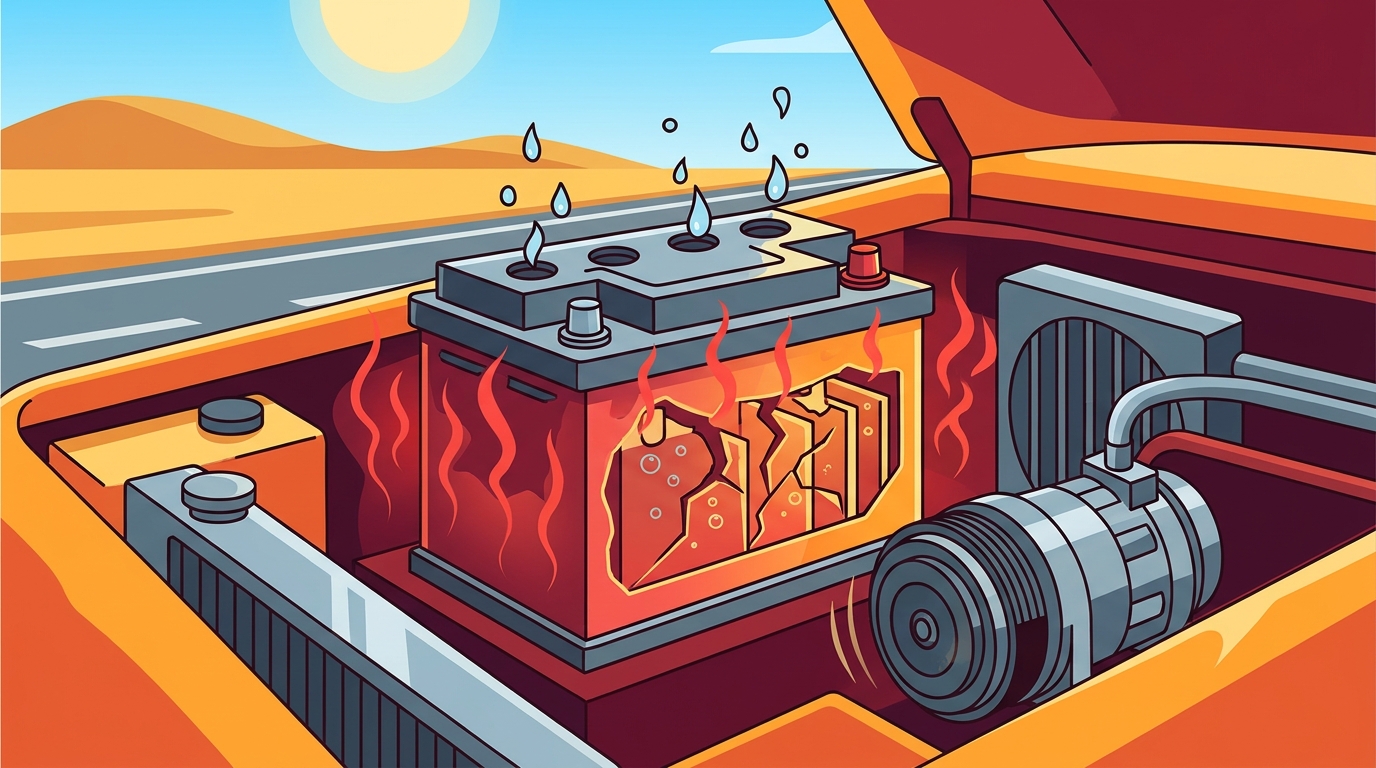
Car batteries fail more often during hot summer road trips because extreme heat accelerates chemical degradation and increases electrical demand. High temperatures cause rapid water loss in the battery fluid, leading to plate corrosion and reduced capacity. Additionally, running the air conditioning system places a heavy continuous load on the charging system, which can expose weak batteries to sudden failure. Toole's Garage recommends proactive testing to prevent breakdowns in the heat.
The Chemical Impact of Extreme Heat
Heat is the primary enemy of lead-acid battery chemistry. A car battery is a complex electrochemical device that relies on a specific balance of acid and water to function. When ambient temperatures rise significantly, the internal temperature of the battery increases even faster. This thermal expansion causes the water in the battery fluid to evaporate at an accelerated rate. As the water level drops, the acid becomes more concentrated, which attacks the lead plates and causes them to corrode. This process, known as sulfation, permanently reduces the battery's ability to hold a charge. The result is a battery that may start fine on a cool morning but struggles to maintain voltage under the stress of a hot afternoon drive.
The Hidden Load of Air Conditioning
Modern vehicles rely heavily on electrical systems, and the air conditioning compressor is one of the most power-hungry components. When you drive in stop-and-go traffic or sit in a parking lot with the engine idling, the alternator must work harder to keep up with the AC demand. If the battery is already weakened by age or heat, it cannot absorb the excess charge or provide the necessary backup power. This creates a scenario where the battery is constantly in a state of low charge. Over time, this chronic undercharging prevents the battery from reaching its full capacity, leading to a gradual decline in performance. Drivers often notice that their vehicle feels sluggish or that the electrical systems dim when the AC is running at full blast.
Identifying Early Warning Signs
Before a total failure occurs, a battery usually provides several subtle warning signs. One of the most common indicators is a slow or labored engine crank. If you notice that your car takes longer to start than it used to, especially on hot days, the battery may be losing its cranking power. Another sign is dimming headlights or interior lights when the engine is off or idling. You might also see the battery warning light flicker on the dashboard, which indicates a problem with the charging system. These symptoms are not always immediate, but they are clear signals that the battery is under stress. Ignoring these signs can lead to a complete breakdown, leaving you stranded on the side of the road during a road trip.
Preventive Maintenance for Summer Travel
Preventing battery failure during summer travel requires a focus on maintenance and monitoring. The most effective step is to have your battery and charging system tested before you hit the road. A professional test can measure the battery's cold cranking amps and its state of charge, giving you an accurate picture of its health. You should also inspect the battery terminals for corrosion, as this can impede the flow of electricity. Keeping the battery clean and secure helps ensure a stable connection. If your battery is more than three years old, it is wise to consider a replacement before a long trip. This proactive approach saves you from the stress and expense of a roadside breakdown.
Professional Testing at Toole's Garage
Toole's Garage provides comprehensive battery and charging system services to ensure your vehicle is ready for summer travel. Our technicians use advanced diagnostic tools to assess the health of your battery and the efficiency of your alternator. We do not just replace batteries; we diagnose the root cause of electrical issues to prevent future failures. Whether you are planning a short weekend trip or a cross-country journey, our team can help you identify potential problems before they become major issues. By choosing Toole's Garage, you gain access to expert advice and reliable service that prioritizes your safety and peace of mind.
Key Takeaways
- Extreme heat accelerates water loss in battery fluid, leading to plate corrosion and reduced capacity.
- Running the air conditioning system places a significant load on the charging system, which can expose weak batteries to failure.
- Slow cranking and dimming lights are early warning signs that a battery is struggling under heat stress.
- Chronic undercharging from high electrical demand prevents the battery from reaching full capacity.
- Professional testing before a road trip is the most effective way to prevent roadside breakdowns.
- Batteries older than three years are at higher risk of failure in hot weather and should be evaluated for replacement.
Frequently Asked Questions
Does heat really damage car batteries?
Yes, heat is the leading cause of battery failure. High temperatures cause the water in the battery fluid to evaporate, which leads to corrosion of the lead plates and a permanent loss of capacity.
How long do car batteries typically last in hot climates?
In hot climates, car batteries typically last between two and three years. The extreme heat accelerates the chemical degradation process, shortening the overall lifespan compared to cooler regions.
Can I check my battery health at home?
You can perform a basic visual inspection for corrosion and check the fluid levels if the battery is serviceable. However, a professional load test is required to accurately measure the battery's cranking power and state of charge.
Does using the AC drain the battery?
Using the AC while the engine is running does not drain the battery directly, but it increases the load on the alternator. If the alternator cannot keep up, the battery may become undercharged over time.
What should I do if my battery dies on a road trip?
If your battery dies, you can attempt a jump start if you have the equipment. However, it is important to have the charging system tested afterward to ensure the alternator is functioning correctly and the battery can hold a charge.
How often should I have my battery tested?
It is recommended to have your battery tested at least once a year, or before any long road trip. This is especially important if your battery is more than three years old or if you live in a hot climate.